
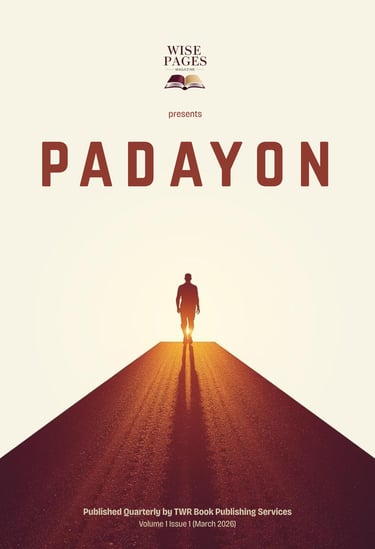
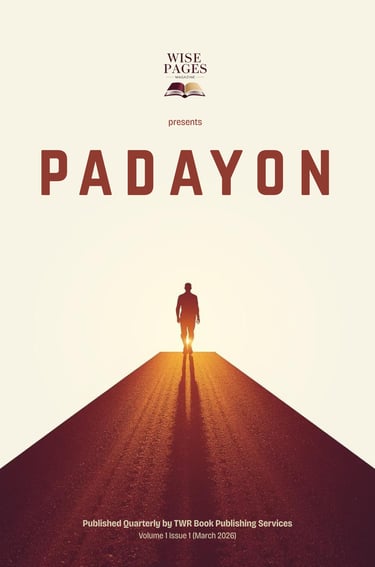
Rooted in Filipino language and culture, padayon is commonly spoken as encouragement, often in times of difficulty. It is offered without grand promises. It does not deny struggle, nor does it rush toward resolution. Instead, it acknowledges uncertainty and responds with presence: keep going, even if slowly; continue, even if the way forward is not yet clear. In this sense, padayon carries both gentleness and resolve—an insistence shaped by care, history, and lived experience.
This inaugural issue takes padayon as its guiding thread, not as a singular idea but as a constellation of meanings. The works gathered here reflect the many ways people persist: through memory and remembrance, through creative labor, through personal and collective histories that leave their mark on the present. Some pieces speak from moments of resilience forged by hardship; others dwell in reflection, tracing how identity, culture, and imagination continue to evolve amid ongoing challenges. Together, they reveal that moving forward is rarely linear, and often deeply layered.
Across genres—poetry, essays, fiction, biographical writing, reviews, and cultural commentary—contributors engage the theme with nuance and restraint. Rather than offering tidy conclusions, these works sit with complexity. They examine what it means to continue when answers are incomplete, when progress feels fragile, or when persistence itself becomes an act of resistance or care. In doing so, they honor the emotional, cultural, and creative labor involved in staying with one’s story.
Volume 1 Issue 1 (March 2026 Issue)
We invite readers to read slowly, to listen closely, and to allow these pieces to resonate in their own ways. May this issue serve as both a mirror and a companion—a reminder that continuing does not require certainty, only the willingness to remain engaged. In choosing to move forward, again and again, we participate in the quiet, enduring work that padayon names so well. Open this issue’s collection of literary pieces.
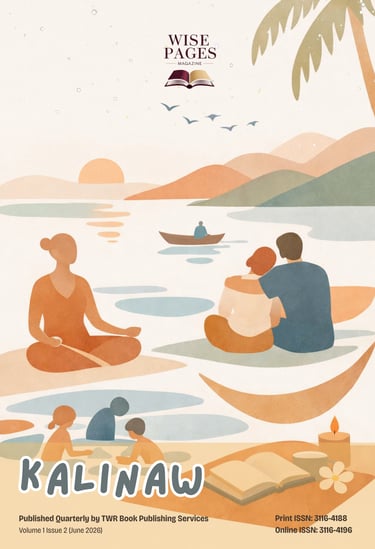
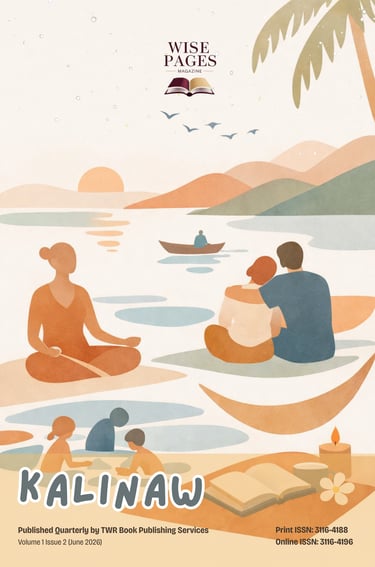
In a time marked by noise, unrest, and unrelenting change, Kalinaw invites us to return to the quiet, necessary work of seeking peace. Not the kind that arrives as perfection or permanence, but the kind we piece together in ordinary moments: in rest after weariness, in healing after hurt, in silence that steadies, in memory that softens, and in reconciliation that makes room for hope. Rooted in Filipino language and culture, kalinaw carries meanings of peace, calm, balance, and restoration—something deeply felt, even when fragile, and all the more meaningful because of it.
For this June 2026 issue, we welcome writing that explores peace in its many forms and tensions. We are interested in works that dwell on the inward and the communal, the personal and the historical, the intimate and the unfinished. Peace may appear as stillness, forgiveness, survival, homecoming, or simply the brief but sustaining moments that help us find our way back to ourselves and to one another. In literature, such moments matter. They remind us that even amid uncertainty, there remains space for tenderness, reflection, and renewal.
Through poetry, essays, creative nonfiction, short stories, flash fiction, biographical writing, reviews, and cultural commentary, this issue hopes to gather voices that engage kalinaw with honesty, nuance, and imaginative depth. We welcome both emerging and established writers to reflect on what peace means, how it is lost, how it is made, and how it continues to shape the inner and shared landscapes of our lives.
Volume 1 Issue 2 (June 2026 Issue)
We invite readers to move through these pages with quiet attention, to listen deeply, and to let each piece settle in its own gentle way. May this issue be both a place of reflection and a source of comfort—a reminder that peace is not always grand or complete, but often found in small acts of healing, stillness, and return. In seeking kalinaw, we come closer to ourselves and to one another. Explore the literary pieces featured in this issue.
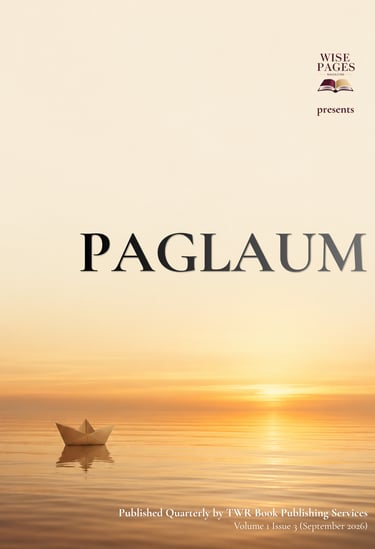
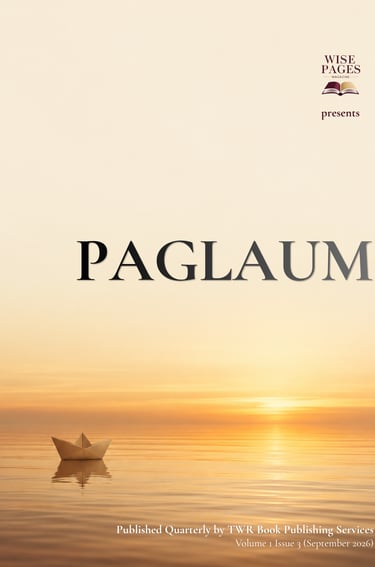
Hope is rarely loud. More often, it appears in quiet gestures, in the decision to begin again, in the soft refusal to surrender to despair. For this September 2026 issue, we gather around paglaum—a word that holds not only hope, but endurance, tenderness, and the steady belief that even in uncertain times, light remains possible.
This issue welcomes works that explore the many shapes of hope: hope as longing, as resistance, as healing, as faith, as memory, and as renewal. It is hope found in ordinary lives and difficult seasons, in personal reckonings and collective dreams. Through poetry, essays, creative nonfiction, short stories, flash fiction, biographical writing, reviews, and cultural commentary, we invite writers to reflect on what it means to keep believing, even when the way forward is not fully clear.
We invite our readers to linger on these pages, to listen with openness, and to let each piece speak in its own time. May this issue become both a reflection and a source of comfort—a gentle reminder that hope does not always arrive with certainty, but often begins with the courage to keep believing. In choosing hope, even quietly and repeatedly, we take part in the enduring spirit that paglaum so deeply embodies. Immerse yourself in the literary selections within these pages.
Volume 1 Issue 3 (September 2026 Issue)


Published Quarterly by TWR Book Publishing Services
Print ISSN: 3166-4188 | Online ISSN: 3166-4196